 ®
® Why did a laser series show no change,
and is a triple stack any different?
Most laser series that show no change were the wrong tool for the concern: broadband light treats color, fractional laser treats texture, and one device cannot do both. A triple stack of BBL, MOXI, and Halo in one session is not more sessions; it is three different jobs, matched to your skin. Here is how to judge that plan anywhere, and how we build it at Reviv.
A series you paid for,
and a mirror that did not change.
Read the low-rated reviews of medical spas within thirty miles of Millbrae and one complaint sits near the top of the results-related list: paying for a series and seeing no measurable change. In our most recent read of the regional record it appeared fifty times, at twenty-six of the fifty-five practices sampled, on the Peninsula and up the bay. Nobody writes that review lightly. A laser or light series is a real commitment of money, calendar, and downtime, and the fear of finishing it with nothing to show is a reasonable one.
The pattern behind most of those reviews is not a broken device. It is a mismatch. Brown spots, freckling, and diffuse redness are problems of color, and broadband light (Sciton's name for it is BBL) treats color: the light is absorbed by pigment and by superficial blood vessels. Rough texture, enlarged pores, fine lines, and shallow scars are problems of texture, and a fractional laser treats texture by creating microscopic columns of controlled injury that the skin rebuilds with new collagen. A photofacial booked for texture can be performed correctly and still disappoint, because as our own photofacial page puts it, BBL does not treat fine lines or texture as effectively as fractional laser. Three more reasons a series stalls: pigment that is melasma rather than sun damage, which broadband light can make worse; sun exposure during the series, which lays down new pigment as fast as the old is cleared; and timing, because texture and tone changes begin at one to two weeks and keep building over eight to twelve weeks, so a series judged at day ten is judged too early.
That is the logic behind the reel this article grew out of. Posted from our studio, it describes BBL HEROic as "designed to improve the appearance of uneven skin tone and discoloration," MOXI as a platform that "supports refreshed-looking tone and texture," and HALO as "designed to support smoother, more refined-looking skin," and it ends with the point that matters: "Together, these technologies allow REVIV providers to create a personalized treatment approach based on individual skin goals." Three jobs, one plan. Not three sessions of the same thing.
Four things a plan should settle
before you buy a series.
Use these at any practice, including ours. A provider who can answer all four without reaching for a brochure is planning a treatment, not closing a sale.
- A named concern, and the tool that treats it. Color or texture? Light for color, fractional laser for texture, and when you have both, a plan that says which device is doing which job. If the plan cannot say, the series cannot be judged.
- Honest scope, including what the device will not do. A provider who tells you a photofacial will not fix your pores, or that broadband light is the wrong tool for melasma in your skin type, is protecting your money and your skin. Silence on limits is the warning sign.
- A screen before the schedule. Skin type, recent sun or self-tanner, isotretinoin within six months, a history of melasma or pigment that darkens after inflammation: each of these changes the settings, and sometimes the right answer is to decline. Ask what was screened and what it changed.
- A timeline and a checkpoint, in writing. When change should first appear, when the series is assessed, and what happens if your skin is not responding. A stack multiplies downtime as well as benefit; the downtime belongs on the same page as the price.
Three platforms, one plan,
matched to the concern.
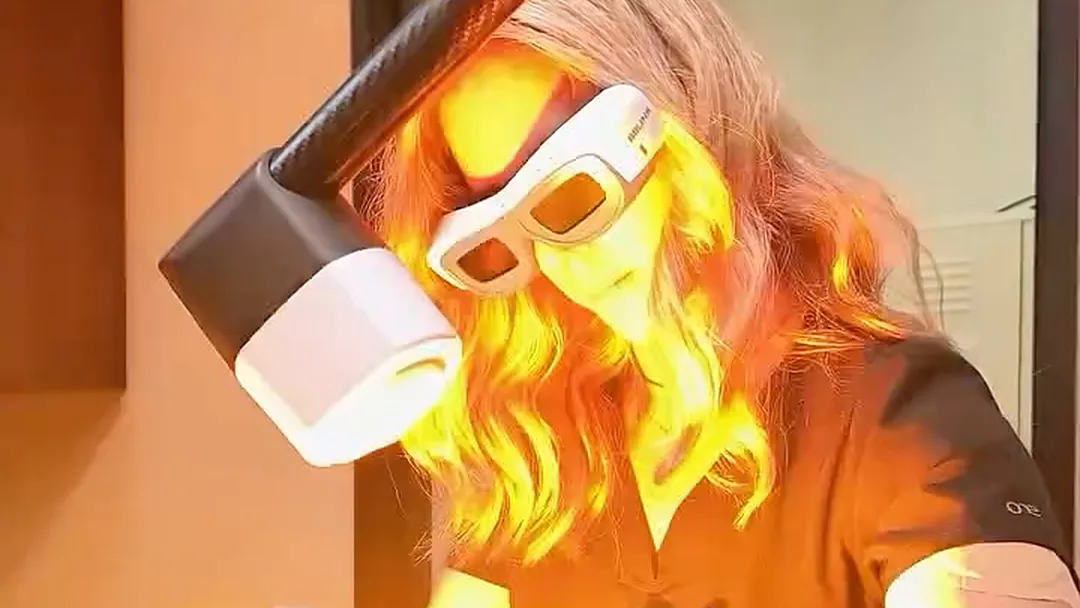
The photograph above is a BBL pulse mid-session in our studio on El Camino Real in Millbrae; a few seconds later in the same reel, the Halo handpiece is working across the cheek with the eye shields in place. The reel was posted with Megan Sosnick, MSEL, MSN, RN, PHN, CNL, our Practice Manager and Aesthetic Nurse, as co-author. At Reviv Med Spa & Laser Treatment, laser and light sessions are performed by Dr. Gayle Misle, MD, an Anesthesiologist holding CA Medical License G38840 and our Founder and Medical Director; by Megan; and by Hanadi Al Ramahi, Medical Aesthetician, who performs Halo and MOXI resurfacing sessions and BBL photofacial sessions; every plan for an energy-device treatment runs under Dr. Misle's oversight. Each is named with their credentials on the providers page, where every license is listed, and you can name the one you want to see when you request an appointment and choose your provider.
We carry three Sciton resurfacing platforms and both ends of the BBL line because each fits a different goal, and we run multiple platforms instead of a single one-size-fits-all device for exactly the reason above. We assess in person and recommend honestly. In your consultation we match the platform, sometimes more than one, to your skin type, your goals, and the downtime you can manage, and we say plainly what a device will not do: BBL is contraindicated in higher Fitzpatrick types (IV–VI) and over melasma, and for those patients MOXI is the safer choice or we decline. When the plan is a stack, the order is written down on our photofacial page: BBL first, then fractional laser, on the same visit. Combinations multiply benefit but also multiply downtime, so we plan around your schedule rather than around a package. If you would rather start with one platform and add later, that is a plan we will write too; how to get an honest opinion without the package pitch describes what that consultation feels like.
The checkpoint is built in. Visible results begin at one to two weeks and compound over eight to twelve weeks as collagen remodels, and we assess together at each session and adjust the plan based on how your skin is responding. Pricing is per session and quoted in writing at consultation, and the written aftercare for every laser and light treatment lives on the care hub so the four weeks of sun avoidance after resurfacing are not a surprise. The Halo half of the stack can also carry platelet-rich plasma applied through fresh Halo channels, which is our strongest combination protocol and is priced separately.
Patients describe the difference in their own words. A Google review from March 2026 about a BBL and Halo visit with Megan says she "carefully explained each step of the BBL and Halo procedure so there were no surprises, and she was honest about what the treatment would feel like." Another, about a Halo session with Dr. Misle, admits to being unimpressed at first, "but just as Dr. Misle had explained, the results were really noticeable about 3 months after the treatment." That is the timeline doing its job. After eighteen years in Millbrae, with more than 300 reviews on Yelp and about 150 on our Google Business Profile, it is what patients from Burlingame, San Bruno, Hillsborough, and San Mateo tell us they came for: a plan that names the job before the light is fired. You can watch the sequence in the practice's thirty-three-second reel.
Where this applies,
treatment by treatment.
Asked at the front desk,
answered here.
Can BBL, MOXI, and Halo really be done in one visit?
Yes. On our photofacial page the combination is written as BBL first, then fractional laser, on the same visit. Combinations multiply benefit but also multiply downtime, so we plan the stack around your schedule and quote it in writing at consultation.
Why did my brown spots come back after a photofacial series?
New pigment can develop over time with continued sun exposure, which is why strict sun avoidance and SPF 30+ during and after a series are part of the plan, and periodic maintenance sessions keep the result stable. If the pigment is melasma rather than sun damage, broadband light is the wrong tool and can make it worse; we screen for that at consultation and say so.
How soon should I expect to see something, and what if I do not?
Treated brown spots darken within days and slough off over five to ten days. Texture and tone changes begin at one to two weeks and keep building over eight to twelve weeks as collagen remodels. We assess together at each session and adjust the plan based on how your skin is responding; the resurfacing page lays out the timeline platform by platform.